Show Debug Message Gamemaker

Install rancid ubuntu. This post about the issues with GameMaker's built-in JSON functions and an extension I made to address the issues. Functions to deal with JSON were originally introduced in GameMaker somewhere around 2011 (when the current product was GameMaker HTML5).
Two main functions are pretty simple: • takes a string containing JSON and returns a structure. • takes a ds_map structure and returns a JSON string for it. Child structures must be marked. And these would have been perfectly fine, but: • GameMaker (currently) stores references to data structures as numeric IDs. • GameMaker (still) lacks functions to determine whether a ds_map ds_list item is marked as a map list (this information is available internally).
Show_debug_message(str) Shows the string in debug mode. Debug_mode This read-only variable indicates whether the game is running in debug mode. Gamemaker_pro Indicates whether the game is created with the Standard Edition.
What does that mean for you? Well - you can't validate the parsed JSON. Consider the following. Hi again, never mind the question, wow, I just found that it works, you only need to reference the child object you want to update. So I made a function “data_deep_get()” to get to the tjson object node level I want, along the way checking things using the tjson functions to avoid errors, and finally returns a value.
Tjson = tj_decode(jsonstr); person_obj = data_deep_get(tjson,”team”,”members”,”person1″); tj_set(person_obj, “role”, “new role”); Then when I do: show_debug_message(tjson); It will show that the particular field’s new value has really been set. Really, you did a great work on this extension, thank you very much.
As software developers, we spend just as much time, if not more, debugging and profiling our programs. Having good tools to make these processes easier is important. Luckily, YoYoGames overhauled its debugger and profiler, making it more robust and easier to use. In this post, I will explain my process when debugging my games, and some tips to find bugs quickly and identify bottlenecks in your game. I will try to cover as much as possible on these tools, but I will most likely miss a few points, given it is such an extensive topic.
It’s a good idea for you to experiment with all these tools yourself and figure out ways to make your debugging experience easier and better. Reading the official documentation is also a great way to learn more about it after you’ve read this article. What exactly is debugging and profiling? We’ve all been in that situation where we write code, run the game, and nothing works like expected. Then we go back to the code and look at it for 20 minutes thinking it should work.
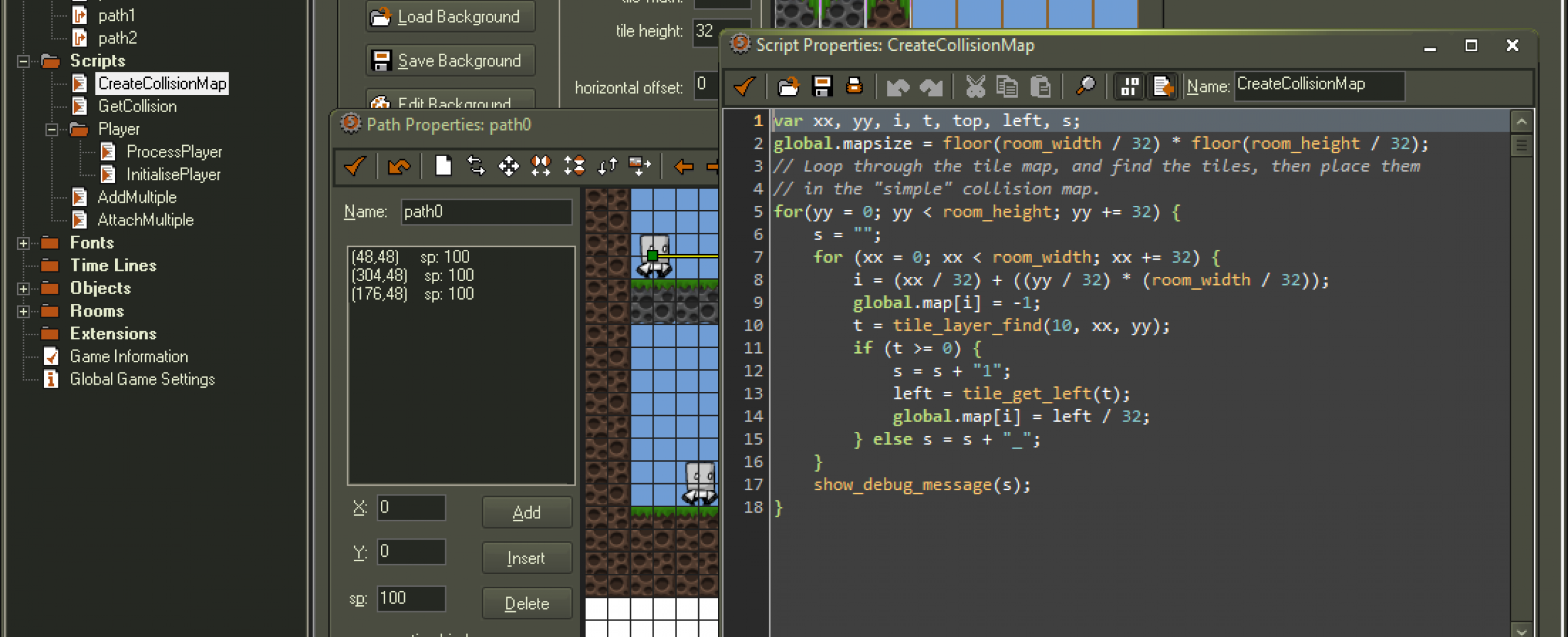
The first solution that comes to mind is to check the values of variables, or the results of conditional statements, by using debug messages or drawing text to the screen. This is fine for quickly debugging a small feature, but when you have many moving parts working together, generating these messages can quickly get out of hand. This is when a debugger becomes useful.